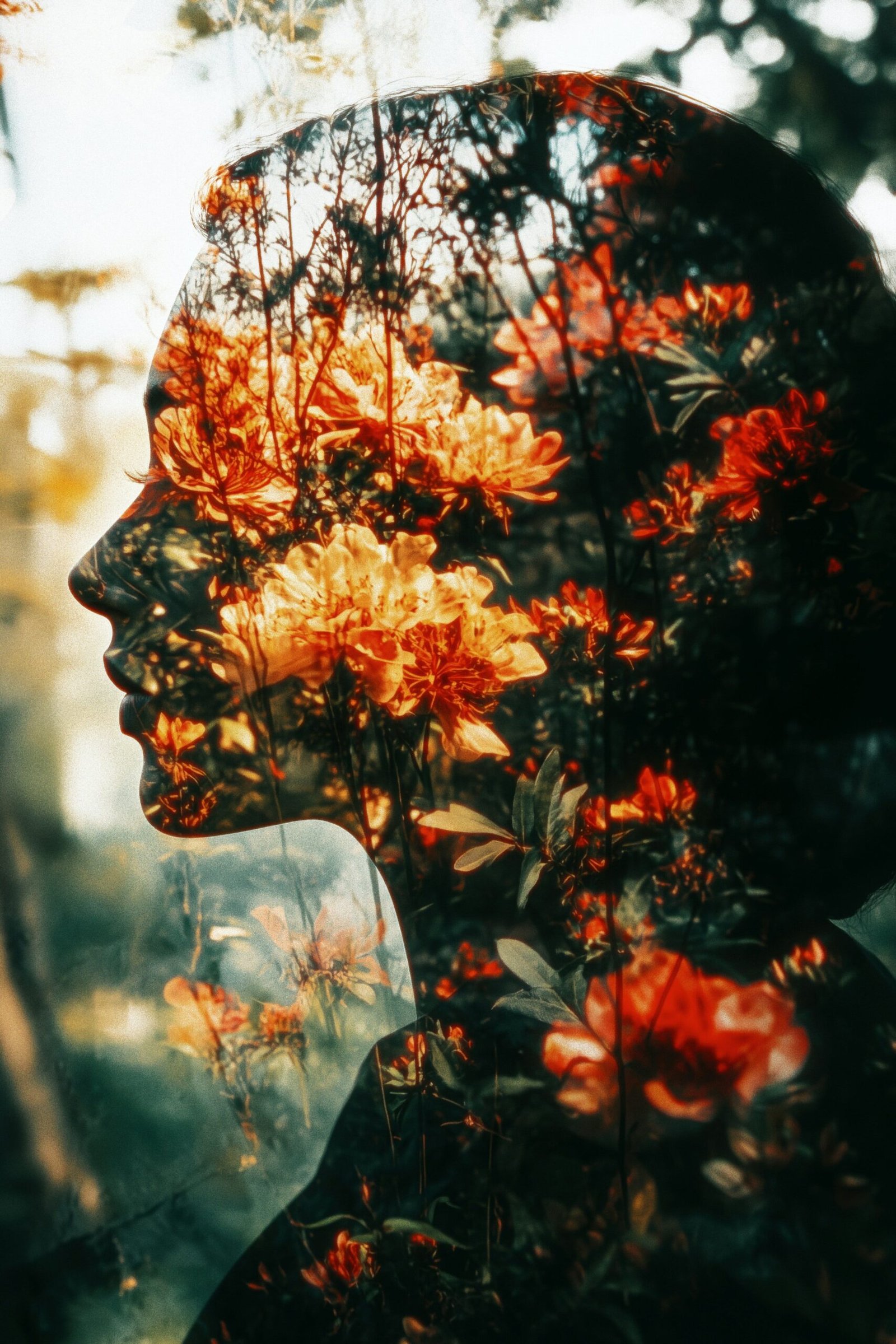
Beauty diffuses itself – and you are a novel instance of it.
The paragraph below is part of a chapter that contains one of the most inspiring and poetic visions of what God could mean. The chapter comes at the end of Elizabeth Krause’s book The Metaphysics of Experience, as a crescendo to her exploration into the nature of reality. It is a dense paragraph that we’ll unpack line by line. Patience carries a reward. Maybe it can only be appreciated fully in the context of the rest of the book, but I will nevertheless attempt to whet your appetite by exploring just this one paragraph.
Yet the infinite beauty of his conceptual structure is the immortal appetition of the universe, actively luring finite creatures up the ladder of love. Beauty diffuses itself, not through acts of efficient creation but through its infinite evocation of novel instances of itself: universes of creatures stirred by the creativity to become God-like by temporalizing the eternal togetherness of primordially ordered form in their concrete immediacy; universes of self-creating creatures whose response to the divine seduction is the incarnation of beauty.[1]
the infinite beauty of his conceptual structure
It is an ancient intuition that our world has a mind-like structure. Everything that exists gives us a glimpse into what is possible for our universe. And what we see is a world that displays both pattern and progress. The fact that our world has developed from a barren ball of rocks, volcanoes, and lifeless oceans into the abundance of life we witness today, shows that possibilities are structured to favor beauty, diversity, and consciousness. Where is this realm of possibilities, and how are they structured to give preference to some more than others? Krause terms it a conceptual structure that favors infinite beauty. Ancient poets referred to the Logos, the logic and the conversation that gave shape to the world we are part of.
is the immortal appetition of the universe, actively luring finite creatures up the ladder of love.
This conceptual world, this divine mind, is intimately related to our actual world. Imagine a mind that can see all possibilities and can arrange even the most contrasting into a pattern of beauty. What isolation and waste this would be without finding a way to give these ideas actual material. A divine mind without flesh “is merely thought thinking thought… devoid of physical experience.”[2] This dimension of God lacks actuality. Simply imagining what is valuable and meaningful does not satisfy. Only when possibility is actualized, when beauty is exemplified, when the logos becomes flesh, does God break free from conceptual isolation and enter real relationship – actual love. Consequently, creation must be lured toward this goal. Beauty awakens desire. Creation finds direction. The beauty of what God imagines is the source of desire that animates our universe. Beauty stirs the appetite of matter to become more than what it is, and the result is a divine romance, an intimate universe in which the ordinary becomes more God-like, and God becomes more material.
Beauty diffuses itself, not through acts of efficient creation but through its infinite evocation of novel instances of itself:
If God were to singlehandedly create (efficient creation) whatever God imagined, it would not be the relational and free universe that exemplifies spontaneity, so essential to beauty. The power of the sublime is not violent; neither does it enforce its own rigid designs upon creation; rather, beauty evokes and seduces the actual world to transcend itself, to fall in love and intertwine itself with the possible world. The ultimate romance happens between what is and what could be. There is a mutual interdependence between the realm of possibility and actuality. God’s act of imagining ultimate value becomes an actual adventure of self-discovery in the process of creation. God finds a body; God becomes; God unfolds. The abstract, impersonal, unconscious aspects of God now become intimately intertwined in this process of incarnation. You, too, are a novel instance of God’s unfolding.
The abstract, impersonal, unconscious aspects of God now become intimately intertwined in this process of incarnation.
universes of creatures stirred by the creativity to become God-like by temporalizing the eternal togetherness of primordially ordered form in their concrete immediacy;
Our temporal and finite existence is where the eternal and timeless thoughts of God find real value. In the immediacy of your experience, abstract ideas become actual relationships. And every experience is an opportunity to partake of something divine; simultaneously, it adds a richness to God’s becoming – flesh to God’s imagination. The timeless vision (eternal togetherness) of the most valuable possibilities (primordially ordered form) becomes a finite temporal event, and in so doing embodies something of God’s mind. Your present moment has eternal value and consequence.
universes of self-creating creatures whose response to the divine seduction is the incarnation of beauty.
Can you see the mutually beneficial relationship happening here? The nature of reality is an intimate affair – we naturally strive to become, and in our becoming, beauty finds a moment, a place, an existence that is not merely conceptual, but tangible. You are part of the incarnation of beauty, a novel instance of God. What you experience is never in isolation – your joy is God’s joy, your pain is God’s pain, your existence is an extension of God’s existence. And similarly, God invites you to partake of the infinite beauty of who they are.
[1] Kraus, Elizabeth. The Metaphysics of Experience: A Companion to Whitehead’s Process and Reality (American Philosophy) Kindle Edition.
[2] Ibid.